
Most DoW developed software and environments are built to perform a single function in a single location. However, they operate within a much more complex ecosystem of integrated systems, firewalls, diverse hosting and support models, hardware and software configurations, and differing administrative structures, all with upstream and downstream dependencies that must be understood and managed. Predator’s strength is in mapping this ecosystem, identifying gaps, and implementing practical solutions under tight budgets.
Secure Infrastructure
- Determining and implementing the ideal balance between on-premises physical/virtual information systems and Azure Cloud capabilities.
- Integrating tactical models and libraries into closed-network simulated environments optimized for future extensibility and maintainability.
- Onboarding hardware: evaluating current hardware/software in use, identifying gaps and future capabilities and use cases, factoring in 3-5 year life expectancy and growth, and providing a hardware bill of materials so the customer can make informed purchasing decisions.
- Managing and configuring machines as system administrators, building and managing high availability clusters, and overseeing cloud computing platforms.
- Hardening hardware and integrating it into the system by installing the required OS version, applying security patches and firewalls via automated configuration, installing company-tailored applications, encryptions, certifications, and VPNs, and configuring access to shared files, mounts, and servers.
CI/CD Pipeline Engineering and Security Automation
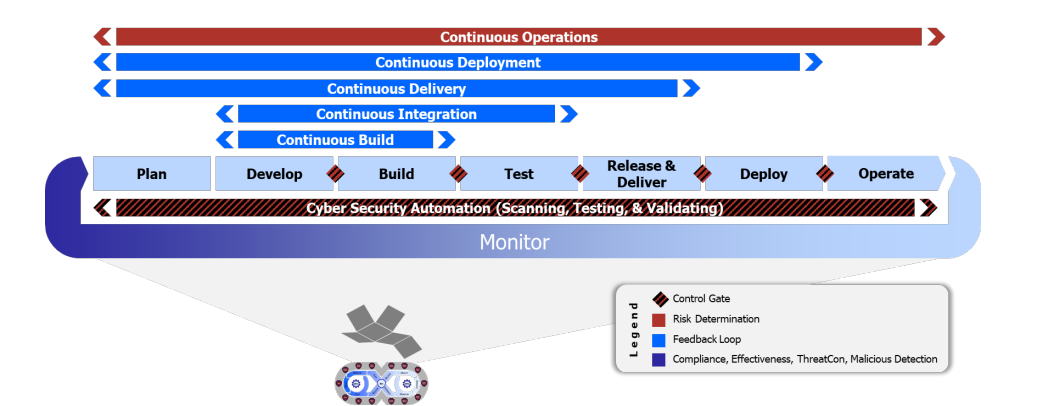
- Deploying packages and updates through CI/CD automation, saving days or weeks compared to manual processes.
- Administering NoSQL/SQL databases and web servers for visualization, analytics, and querying.
- Introducing data analysis tools that reduce workload by days, and in some cases weeks.

Application Security
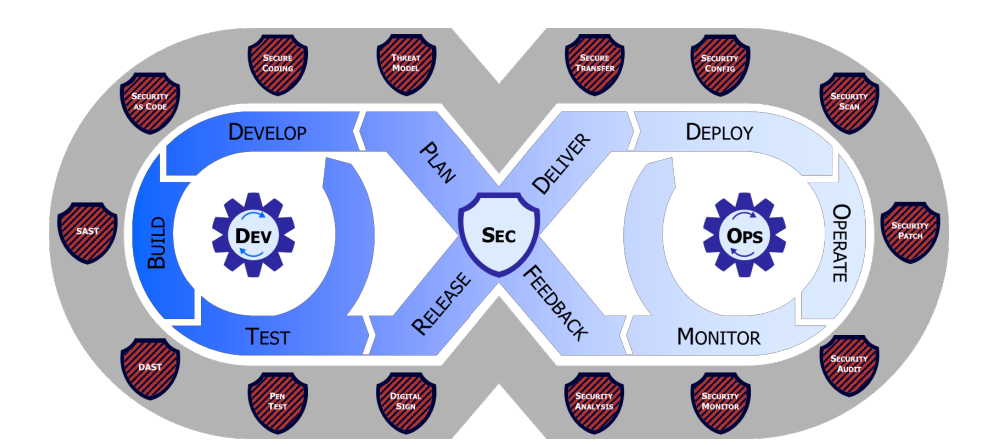
- Implementation of input validation, output encoding, proper authentication and authorization controls, and secure error handling mechanisms.
- Conducting security analysis in parallel with integration and testing, recording procedures and documentation, and using tools such as Fortify or STIG to identify and outline risks.
HWIL
- Accelerated hardware-in-the-loop design studies, evaluating multiple HW/SW test configurations to quickly determine optimal system performance.
- DevSecOps driven HW/SW network evaluations, analyzing server hardware and configuration options to optimize performance, scalability, and resilience across distributed systems.
Personnel Certifications
- Sec+
- A+
- Az900
Platforms & Tools
- RHEL/7/8/9
- Windows and Windows Domain Services
- GitLab
- Podman/Docker
- Ansible
- Oracle’s VirtualBox
- ProxMox
- Azure DevOps
- Jenkins
- Fortify
- Coder